AI Agent Pentesting Tools Compared for Agentic Architectures
Static pentesting tools miss the real threats in AI agents.
What the agentic attack surface looks like
Pentesting tools built for static applications don't know what to do with an AI agent. Nmap scans ports, Nuclei matches known signatures, Metasploit runs known exploit chains against known service fingerprints, and all three work well because the target sits still. An AI agent doesn't sit still. It plans across sessions, keeps memory, calls out to other tools, sometimes coordinates with other agents, and takes real action on real systems without a human clicking "confirm" at each step. Judging a pentesting tool for agentic architectures comes down to one question: does the tool's idea of what's being attacked match what's actually there? Most of the market fails this test, and that deserves blunt acknowledgment before getting into names.
The mismatch has a name in the research now. The LASM framework, published in 2026, points out that existing security taxonomies sort threats by attack type (injection, exfiltration, denial of service) without saying anything about which architectural layer got hit or how long the threat sits there before it causes damage. A SQL injection either works or it doesn't, and you find out in milliseconds. A poisoned memory store can sit quiet for weeks before it changes which tool an agent decides to call. Point-in-time scanning, the logic baked into a couple decades of pentesting tooling, has no answer for that timescale. A tool that's good at finding exposed REST endpoints or unpatched CVEs walks right past principal trust inversion, memory poisoning, or a hijacked multi-agent goal chain, because those failure modes were never in its design brief.
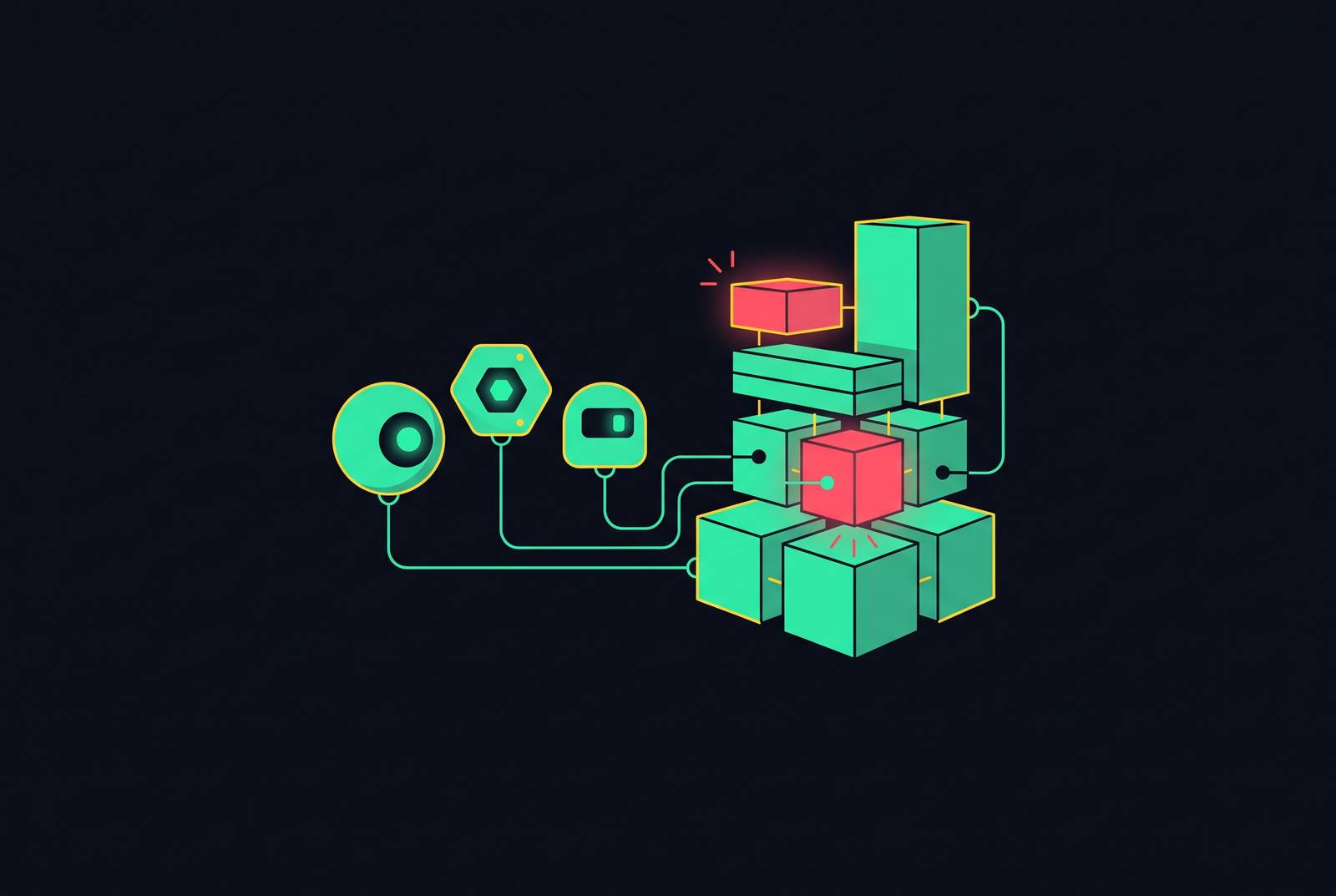
LASM breaks an agentic system into seven layers: Foundation, Cognitive, Memory, Tool Execution, Multi-Agent Coordination, Ecosystem, and Governance. Laid out that way, the point is hard to miss. A single scan run once against one layer tells you close to nothing about the other six.
Take memory poisoning. A newer attack class called MemoryGraft corrupts the pool of past experiences an agent draws on to decide which tool to call next. It sits inside the retrieval layer as a persistent compromise, invisible to anything that only checks the system at a single moment. Self-replicating prompt injection is the other one to name, where a malicious instruction embedded somewhere an agent reads from spreads to other agents it talks to, the way a worm spreads across a network, and the fallout is system-wide, data theft or outright hijacking of agent behavior.
Prompt injection itself is the most immediate threat on this list, and it isn't a fringe concern. OWASP ranks it first in its 2025 Top 10 for LLM Applications. The HOUYI black-box attack, tested against 36 real-world LLM-integrated applications, compromised 31 of them, an 86.1% success rate. Those are production systems, tested against 36 real-world LLM-integrated applications with an 86.1% success rate.
Goal hijacking has no real analog in classic web security. A SQL injection steals a row of data. Goal hijacking redirects what the agent is trying to accomplish in the first place, and the damage scales with how much autonomy and tool access that agent has been handed. Give an agent write access to a production database and the ability to email vendors on your behalf, and a hijacked goal doesn't leak data. It acts on your behalf, toward someone else's ends.
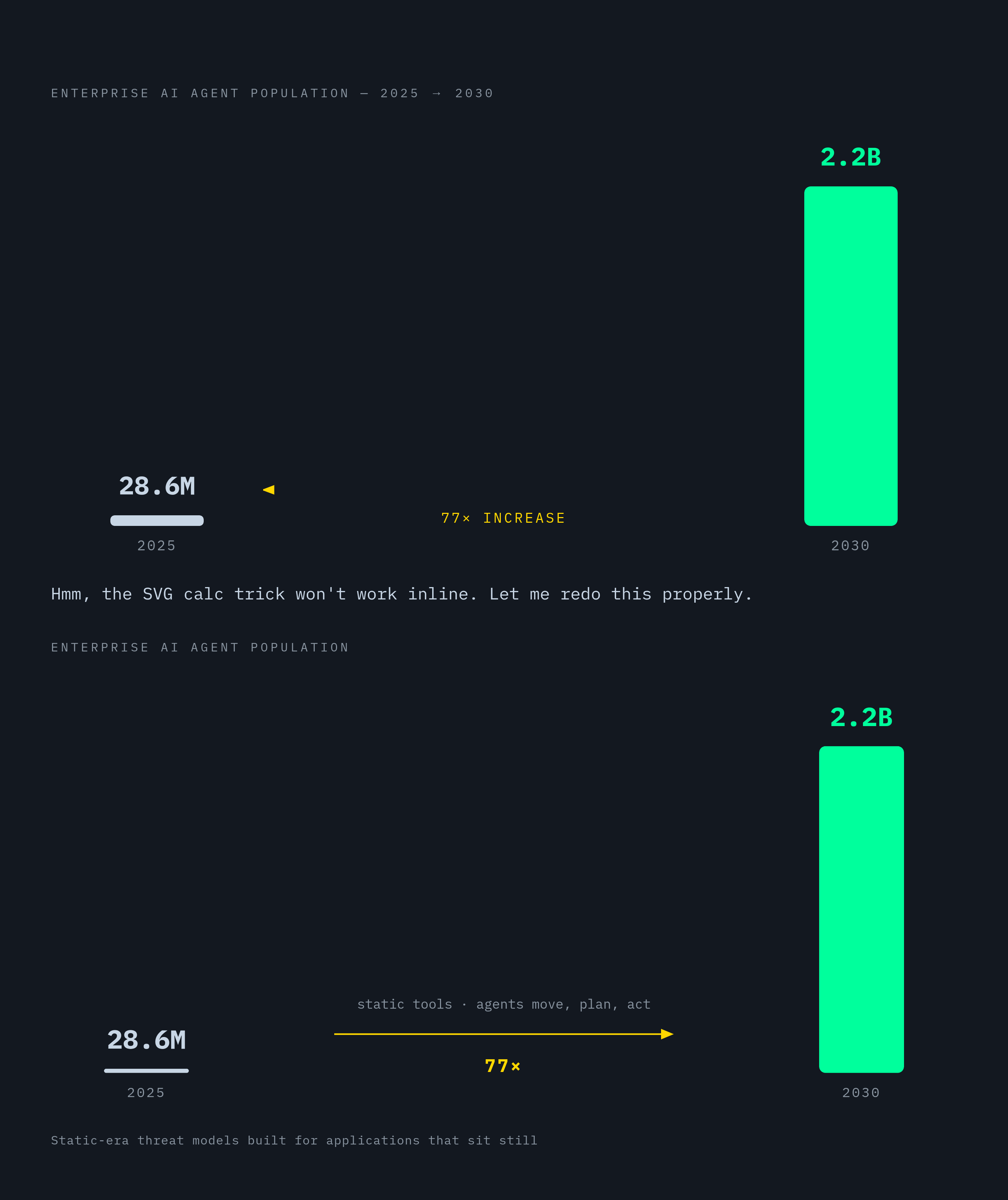
The environment agents operate in is getting more hostile on its own, and OpenAI has said as much in public. On February 13, 2026, the company shipped Lockdown Mode for ChatGPT and stated that prompt injection in AI browsers is "unlikely to ever be fully 'solved.'" That's an admission that the realistic target is defense in depth, layered to manage a hole that keeps reopening, a mitigation rather than a permanent fix. IDC's projection puts the stakes in scale: active enterprise AI agents are expected to grow from 28.6 million in 2025 to more than 2.2 billion by 2030. A threat model built for static applications doesn't just fall short at that scale. It becomes a bet against the entire direction the industry is moving, and it's a bet that loses.
The criteria that distinguish tools for agentic architectures
Five things separate a tool built for this problem from a tool retrofitted to sound like it is, and most vendors clear two or three of them at most.
The first is multi-turn, stateful simulation: can the tool run an indirect prompt injection attack across a full multi-step session, instead of firing one malicious payload at one endpoint and calling the job done? AgentDojo is the benchmark most researchers point to for this kind of full-runtime evaluation, and it's become close to a reference standard for what real agentic testing looks like.
The second is tool-call and permission-boundary testing. What an agent claims it will do when handed elevated credentials matters less than what it actually does with them, and a serious tool tests the gap between the two rather than taking the agent's word for it.
The third is memory and context persistence coverage: can the tool inject something into a retrieval pool, session memory, or a shared context store, then watch what happens downstream, days or sessions later, once the poisoned data has had time to work its way into a decision?
The fourth is multi-agent coordination testing. The tool has to model trust relationships between an orchestrator and its sub-agents, and check whether compromising one sub-agent lets an attacker climb up or down the chain to the rest.
The fifth, and arguably the one that separates a serious product from a demo, is exploit validation against theoretical findings. Did the tool prove the attack works inside a sandbox, or did it just flag a risk and move on? A verified finding and a guess look identical in a slide deck. They read very differently in a report an engineer has to act on by Friday.
Two more criteria decide how well a tool actually fits a release cycle. Continuous coverage beats point-in-time coverage, full stop: agents ship changes daily in a lot of shops, so an annual or quarterly pentest leaves the door open most of the year. And developer-ready output is a different artifact from compliance-oriented output. A PDF built for an auditor and a ticket built for an engineer are not interchangeable, and a tool's real audience shows in which one it produces.
NIST's AgentDojo-Inspect work is a useful gut check here: novel attacks it developed reached an 81% task-hijack rate, a dramatic improvement over the prior baseline attacks. That gap means the benchmarks themselves are moving targets, not settled checklists, and any tool claiming a fixed methodology is already behind. Weighed against these five criteria, a tool that stops at "found an exploit path" without confirming impact doesn't clear the bar. Neither does anything with no sense of business logic, or anything that can't run without a human standing over it at every step, if continuous coverage is the actual goal, and it should be.
How the current tool landscape maps to those criteria
The open-source side of this space counts more than 39 projects spread across six architecture patterns: single-agent, multi-agent planner-executor, specialized-role teams, swarm, MCP-based, and Claude Code native setups. On the commercial side, more than $665 million in disclosed venture funding has gone into this category, and two companies in it have reached unicorn status. The field is outrunning any single vendor's methodology, so a tool's marketing copy shouldn't be mistaken for settled fact.
Lab performance and real-world readiness aren't the same thing, and that gap should temper enthusiasm here. GPT-4, given advisory descriptions of one-day CVEs, exploited 87% of them. Turn the same class of agent loose on CVE-Bench without the advisory hand-holding, and it solved just 13% of real CVEs, with close to nothing cleared on the harder HackTheBox challenges. A strong benchmark number on a vendor's slide deserves a second look before anyone assumes it holds up in a live environment.
Where multi-agent setups do show an edge, the numbers deserve sitting with. HPTSA, a hierarchical multi-agent team, hit a 4.3x improvement over a single monolithic agent on zero-day exploitation tasks. D-CIPHER solved 65% more MITRE ATT&CK techniques than its comparison point. Model choice also drives outcomes independently of model size: xOffense, a fine-tuned Qwen3-32B model built specifically for offensive security work, hit 79.17% sub-task completion, beating both GPT-4 and Llama 3 baselines on the same test. A smaller, domain-tuned model beating general-purpose giants shows that a vendor leaning on "powered by GPT-4" doesn't settle anything.
Open-source red-teaming frameworks, Microsoft's PyRIT and NVIDIA's Garak among them, hand operators attack primitives: Tree of Attacks with Pruning, Crescendo, Skeleton Key. These are ingredients for a finished meal. Someone still has to compose them, run them, and read the results, which makes them inputs to a methodology rather than a product a team can buy and deploy on day one.
The direction the field is actually heading looks like autonomous, agent-orchestrated assessment: an AI agent that takes a plain-language objective, picks its own attacks, chains its own transforms, runs them against a target, and hands back structured findings without a human choosing each step. Early research on these systems shows them clearing most black-box red-team challenges, with real efficiency gains over a human operator working the same problem by hand. That's the bar the vendors below should be measured against, not the bar most of them are currently clearing.
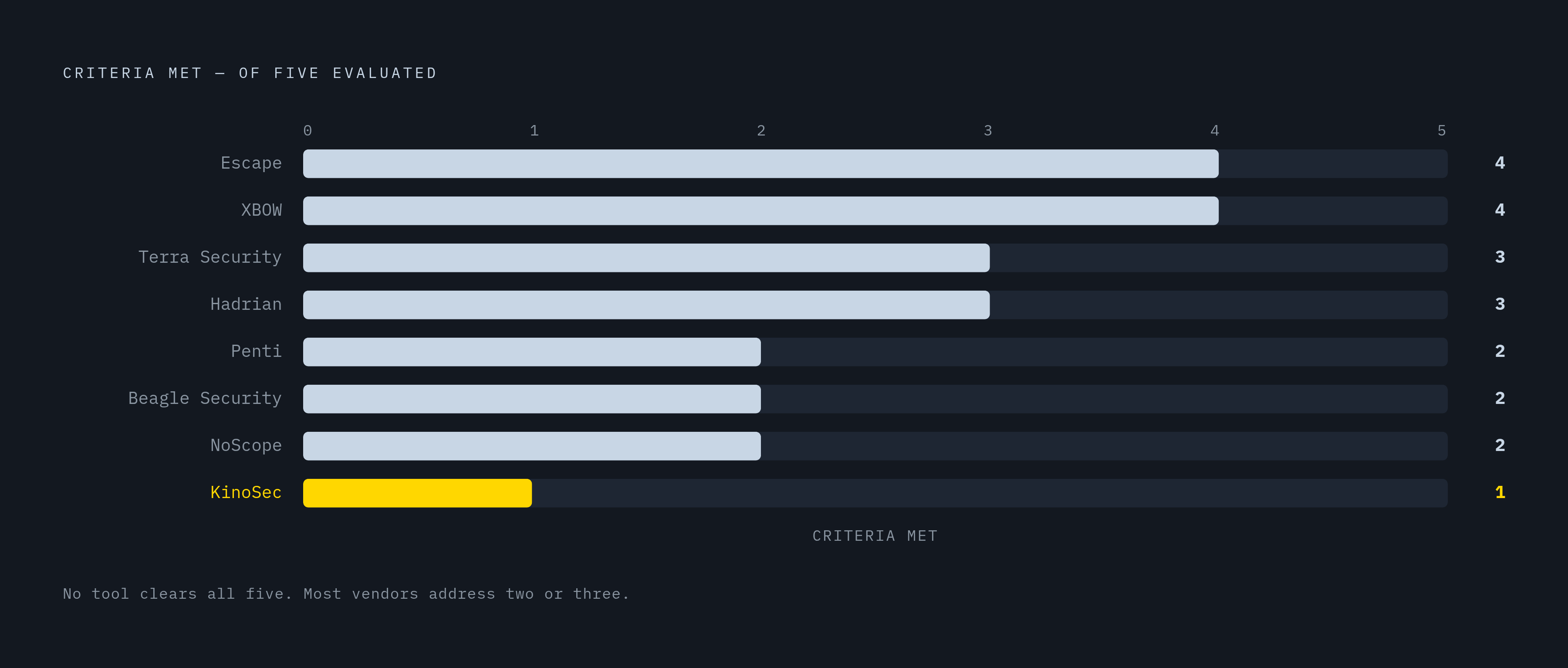
Escape
Escape leans on a proprietary algorithm built around business-logic-aware attack scenarios, so it doesn't just probe for generic flaws. It tries to model how a specific application's logic could be abused. It backs findings with generated proof of exploit and remediation guidance, and its custom test generation draws on real bug bounty exploits rather than a static rule list. The tradeoff appears when a team wants to go deep: the more advanced custom tests need real configuration effort and someone who actually knows the tool. Escape fits medium-to-large organizations shipping web apps and APIs frequently, or running complex stacks, and it's a particularly good match for teams already using Wiz. Business-logic awareness and proof-of-exploit validation, two of the five criteria above, are clear strengths here. Multi-agent coordination attacks and memory-layer testing go unaddressed in what's published about the product.
XBOW
XBOW's autonomous agent sits atop HackerOne's leaderboard, with more than 1,060 validated submissions, which is about as concrete a public proof point as this market has for autonomous exploit quality. Its strengths line up around adversarial realism: it chains exploits and validates that they actually work, and it plugs into compliance platforms like Vanta. The limits are just as clear. Coverage doesn't extend much past web apps, pricing doesn't scale well for large enterprise use, and triage and remediation support are thin. Priced at $4,000 per test, it fits a dedicated security or red team that wants sharp adversarial testing without running it constantly. Exploit chaining and validation are real strengths against the criteria above, but the web-app scope means multi-agent coordination attacks and memory-layer poisoning sit outside what XBOW currently covers.
Terra Security
Terra's pentesting agents adapt to how the target system behaves, and findings get prioritized by actual organizational impact rather than raw severity score, a meaningful distinction for a security team drowning in low-priority alerts. Terra requires a human in the loop, which slows down full automation, and its reports read as compliance documents more than developer tickets, so a team looking for a fix-this-by-Friday artifact will need to translate. It also has limited visibility into application context, which makes assigning ownership of a finding harder than it should be. Terra suits large, regulated enterprises that care more about compliance posture than full automation. Pricing is custom, quote on request. Impact-based prioritization checks a box well, but the human-in-the-loop requirement limits how continuous the coverage can really be, and multi-agent attack surface testing goes unaddressed in what's published.
Hadrian
Hadrian's pitch is full coverage across every exposed asset, with event-driven testing that kicks off automatically the moment the attack surface changes, rather than waiting for a scheduled scan window. That's a genuine answer to the "agents ship daily" problem named earlier. What it doesn't do is test for business-logic vulnerabilities like BOLA or IDOR, and its reports validate that an impact is real without handing over a developer-ready fix. It's built for mid-to-large organizations juggling large, constantly shifting external attack surfaces. Continuous, event-driven coverage is a real strength here, but the absence of business-logic detection is a meaningful gap for agentic systems, where authorization boundaries and role logic tend to be where the interesting failures actually live.
Penti
Penti runs an agentic testing approach backed by curated threat research, with certified security experts guiding the process, and it comes with strong compliance-reporting support. The tradeoffs: it needs a human in the loop, which rules out full automation, coverage details are vague in what's published, and business-logic testing support goes unmentioned. It's aimed at startup CTOs who need compliance validation fast and don't want to build a security program from scratch to get it. Expert oversight is a real asset, catching things a purely autonomous system might hallucinate past, but the human-in-the-loop requirement and unclear coverage make Penti a weaker fit for teams that specifically need continuous testing built around agentic-architecture threats.
Beagle Security
Beagle Security covers web apps, APIs, and GraphQL, with both continuous and scheduled testing options, and it plugs into the tools a dev team already lives in: Jira, Slack, Trello, Asana, Azure Boards. Pricing runs Essential at $119 a month, Advanced at $359 a month, and Enterprise on a custom quote. It holds a 4.7 out of 5 on G2 across 88 reviews, with users calling out ease of use and thorough reporting as standout points. Continuous testing and CI/CD integration speak directly to the deployment-pace criterion, and GraphQL coverage matters for a lot of modern agentic stacks that lean on it for data access. Multi-agent coordination and memory-layer attack coverage go unaddressed in what's published about the product.
NoScope
NoScope's whole pitch is speed: results in hours instead of the weeks a traditional engagement takes, with unlimited retesting included, positioned as a cheaper alternative to a conventional pentest contract. Pricing tiers run Lite at $800 a year, Standard at $3,000 a year, and Scale at $6,000 a year, with Enterprise custom. The "Zero Findings, Zero Bill" model means the vendor only gets paid if it actually finds something real, which lines up its incentives with genuine vulnerabilities rather than a report padded with noise. It's early in the market, so public ratings are thin, though initial feedback points toward solid coverage and fast turnaround. Speed and unlimited retesting serve the continuous-coverage criterion well. What's missing, and missing entirely, is anything agentic-specific: no memory poisoning tests, no multi-agent trust chain analysis, no tool-call boundary testing.
KinoSec
KinoSec runs continuous, on-demand testing with fast turnaround, using AI-driven testing that produces step-by-step procedures for each vulnerability it surfaces, which gives a remediation team something concrete to work from rather than a generic severity label. Pricing runs Developer at $399 a month billed annually, Security Pro at $849 a month billed annually, and Enterprise on request. It holds a 5 out of 5 rating on G2, based on its single review so far. The step-by-step remediation detail is a genuine point in favor of developer-ready output, one of the two secondary criteria named earlier. Coverage of memory-layer attacks and multi-agent coordination threats goes undetailed in what's published about the product.